Showing posts with label new album review. Show all posts

Sunday, 30 August 2020

Prog rock at a cosmic scale: Rick Wakeman's The Red Planet


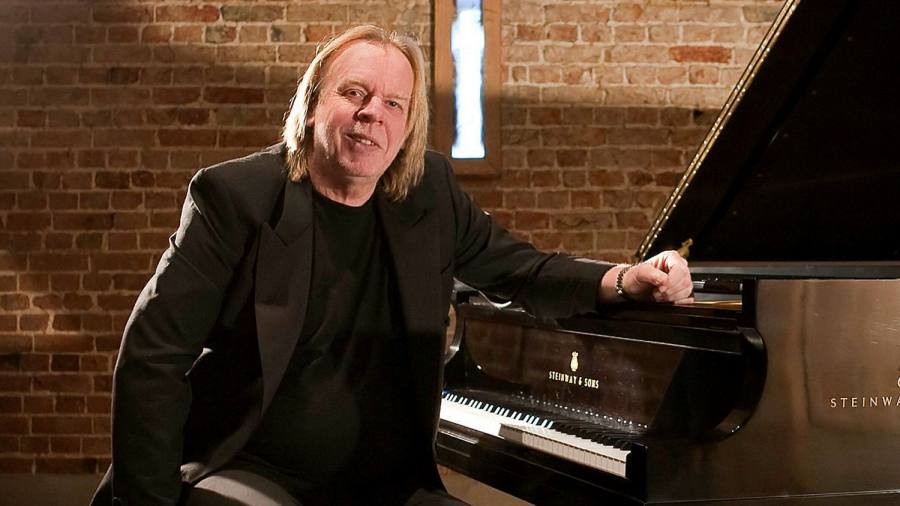
The so far rather surreal 2020 can bring some epic delights, too - and it seems one of them is the new studio album by the keyboard legend Rick Wakeman and his band,  The English Rock Ensemble.

One never knows what might be released by this veritable institution of progressive rock, as Wakeman has amply demonstrated his ability to travel effortlessly across many genres and styles. Over the thankfully many years of his compositional and keyboard wizardry, we have heard everything from vast choral-symphonic epics to energetic instrumental rock to solo piano gems to tranquil, even ethereal,  soundscapes.

This album's music is quintessential Wakeman, of the kind we haven't heard for some years. Every  phrasing, every ornamenting of the lead lines on the keyboard, the gear changes, the epic, even majestic, passages, the juxtaposition of very different musical layers that all work together splendidly in true Yes manner... 

Whether one arrives at this album with novice ears & eyes, without any exposure to Rick Wakeman's monumental discography, or as an avid prog-rock fan with shelves bending under the weight of his and other prog luminaries' albums... either way The Red Planet will highly probably prove to be a thoroughly satisfying listening experience.

Wakeman's landmark concept albums always had majestic overtures, the very first chords and musical phrases inevitably grabbing the listeners' attention - as the great Italian Baroque composers have done. Unlike some of the latter, Wakeman always knew how to continue in captivating ways... 

The opening track, Ascraeus Mons is an overture that is worthy successor of those fondly remembered Wakeman albums' grand openings. Imposing organ chords are quickly followed by splendidly fluid synth lead motif, with the usual (and expected) virtuosity set the scene for the album - but we are treated to a through-and-through rock guitar solo, too. 

Tharsis Tholus gives the listener a chance to have an initial repose, before we have sudden changes of gear, direction, and even tonality in true Yes fashion... and then fast-paced, typically ornamented organ and Moog melodies come in. Wakeman really, truly, rocks off with his inimitable Moog solo. The freshness of the music is remarkable, so is the almost superhuman keyboard skill that almost absurdly hasn't been affected by the passing of many decades... 

Arsia Mons keeps the energy levels high, opening with an abrasive and spirited riff, punctuated by epic drumming... before it suddenly gives way to an atmospheric passage of quasi-poetic beauty. The phased synth background with the gentle layers of notes on top of it make it quite dreamy, before the energy  return with intertwined drums, keyboards, guitars flying off again. Another quiet passage brings the guitar to the forefront, with organs just gently underpinning it until the phased synth pads arrive again for a dreamy finale... making the whole track float off into some kind of cosmic tranquility...

Olympus Mons shifts gear again, we jump from introspective dreamy sound waves to fast fingers running up and down on the organ keyboard, chasing the fiery drums, with guitars speedily circling around the central musical motifs... This then transitions to a majestic organ-heavy chorus of an almost anthem-like feel, followed by a super-tight good and proper rock affair, with riffs and a synth lead that are utterly impossible not to do some head-bobbing to. 

The North Plain moves us into the realm of mysterious ambiental layers of sounds, tiny musical motifs hovering in the sonci textures conjured by Wakeman... until it transitions into another eminently head-bobbing passage... Catchy and tight riffs provide the structure for an organ solo that just brings the ceiling down even before that, oh yes, that Moog sound returns for a fiery solo. As in previous tracks, we rapidly switch gears - we are suddenly back in an eerie and almost spooky soundworld, until the Hammond organ again throws us into a world of motion and light.

Pavonis Mons is again a highly animated and animating track, with a precise riff preparing the scene for those Mellotron strings and Moog leads that enchant any Wakeman fan. The melodic content is, once again, extremely catchy - with improvised ornamentations that are instanty recognisable in style. The instrumental arrangements show that no sonic colouring is out of bounds, as in the middle of a high-flying rock discourse we have piano, too having a heck of a dialogue with the Moog. 

South Pole fades in with a wash of sounds, giving way to yet another captivating melody that glides effortlessly above layers of synth sounds and laid-back drumming. It has just the right tempo and choice of softer synth sounds to make it a dreamy, yet purposefully flowing track. The synths give way to a solo piano passage of superb and delicate beauty, which feels like a calm sonic oasis... before the track builds up, lifting us again with the synth rich pads and catchy lead motifs.

Valles Marineris opens with a menacing military march-like rhythmic pattern, as the god of war deserves in a way...  The guitar and percussion take centre stage initially, with synths providing a circular melodic thread that carries the whole structure forward. This track, too manages to build up effortlessly into anthem-like passages, and one could be completel forgiven for finding oneself whistling along, too... After trumpets, fiery Moog, and thundering drums, the rich arrangements allow the piano to shine again, before the catchy melody returns with a flute-like synth lead. The structural thinking is again evident, as the track is as perfect ending to the album as perfect grand opening the first track was.

It is a highly cohesive and structurally admirably constructed album, with a consistent quality throughout. The eight tracks combine into what some of the best of concept albums are known for: an adventurous musical journey through many moods and mental images, during which the tracks feel inseparable from each other. 

In a world of sound snippets and random playlist shuffling, The Red Planet definitely stands apart and works best as a whole - as an album. 


Sunday, 8 March 2020

S-A-W waves of the past, Ghosts of the present


In somewhat quick succession, certain camps of electronic music afficionados could treat themselves to two new releases with stellar pedigree...

After some solo and group ventures, one of the pivotal ex-members of Tangerine Dream, Johannes Schmoelling has teamed up with Kurt Ader, and Robert Waters under the S-A-W project name.

Their first outing on a full-blown album wears the aptly chosen title Iconic...

Two characteristics can be noticed immediately when listening to the album.

First of all, we are on very cosy and familiar territory in terms of the sub-genre of electronic music we are being treated to. No major surprises, no stylistic shocks, and thankfully no drifting into highly commercial trendy territories. This is competent and confident "Berlin School" electronica, as the first delayed sequencer patterns tells us some seconds into the first track.

Secondly, we might be able to distinguish very specific personal styles (e.g. Schmoelling's chromaticism is instantly recognisable), but this musical collaboration is one that gels very well, so-to-speak. The individual contributions are combining very well, without very firm separation lines running through the music material.

In terms of range, we are treated to quite a lot. From high-spirited sequencer patterns to vintage vocoders to catchy melodic leads to almost improvisation-sounding piano wanderings we have everything here. The album has even a rather dark and atmospheric middle section, when things turn more experimental.

Some of the tracks have the feel of a very successful jam session, with lead motifs hovering above a bed of confidently ticking and spiraling sequencer motifs. Some are so catchy that are venturing almost into the territory of retro synthwave tunes.

With the risk of sounding as if one is expecting some magnanimous musical innovation, instead of a comfortable return to quintessential Berlin School musical language... one aspect of this album is just that: it is a return to something very welcomed but also very familiar.

In many ways, this is a retrospective look at a musical language that is very close to our Tangerine Dreaming hearts & minds, hence one can very much welcome it and enjoy it. However, it really is gazing into the past - and the intention seems clear, with the use of vocoders, certain specific patches, and truly vintage sweeping filtered noise effects and the like.

One can very much hope this is just the first S-A-W album of many, and hopefully this collaboration will have more longevity than Loom had.

Something that is, however, very "now" is the new album by another eminent ex-Tangerine Dream member, Paul Haslinger.

After a number of high-profile or unfortunately overlooked soundtracks, too, one might expect an energetic and possibly high-octane electronic journey. Instead, the album that was born out of almost a decade of piano improvisations brings us something highly contemplative and introspective.

If we experienced delicious nostalgia whilst listening to Iconic, Haslinger's album Exit Ghosts is something from a vastly different musical Universe.

If one takes Ryuichi Sakamoto's astonishingly delicate album async [sic], any of Olafur Arnalds's more piano-centric solo works, or Nils Frahm's piano textures, then one can build an image about that particular Universe.

Exit Ghost is firmly situating itself in that sonic world. Again, no major surprises and no huge leaps into some never before heard experimental directions... However, the rather special beauty of this album is just how subtle and seamless the musical journey is.

We get almost translucent textures like some sonic nebulae, with infinitely delicate tiny motifs. Every piano note has its own life, sometimes we can hear them blending in with the sonic textures, in other moments they hover on their own in mid-air and make us appreciate the delicate process that created them.

Once again would commit here the sacrilege of not going through the album in a track-by-track fashion - as, perhaps even more so than Iconic, Exit Ghost works best as part of a full album listening experience.

There are moments of such delicate sonic sculpting that it makes one think of the most vaporous and subtle moments of Thomas Newman soundtracks, where a single sound can express seeming impossible range of things. There are moments of melodic motifs that will not go away in the mind, and will hover around the room for many hours after the album itself finished playing.

As abstract as it may sound to say this, and even ludicrously "new age" in terminology, but Exit Ghost is like a highly meditative sonic cleansing that will push away all the madness and turmoil of the everyday reality. It does this without being that type of empty musical escapism that we find in myriad "new age" records - and this album comes with a huge degree of artistic honesty.

In our noisy and trend-chasing world, it is quite a fete to be treated to two such albums, both very firmly rooted in their own respective, and vastly different, sonic Universe.

After a journey into a splendid and Iconic past, as different as it is, giving a spin (or a streaming) to the here-and-now expressive minimalism of Exit Ghost is a highly recommended double treat.


Friday, 25 January 2019

Nocturne - the contemplative new album by Vangelis


After the Rosetta album that took us into outer space, and returned to a uniquely epic and passionate version of space rock we last heard some decades ago on a Vangelis album, the new studio album Nocturne is eminently intimate and terrestrial. It contains 17 tracks, with the majority being new compositions.

The record company's initial information about the upcoming release may have wished to entice certain segments of the public, as Nocturne was everywhere stated to be a "solo piano album". As it became increasingly clear that it wasn't, various outlets have backpedalled on this...

Some sites to this day obstinately misinform with statements like "for the first time Vangelis plays a grand piano on this record", which is complete and factual nonsense, full stop.

Based on the first single to see the light of day, namely the track entitled Nocturnal Promenade, it became obvious that one will be treated to piano (and sometimes piano-like) sounds pushed through copious amounts of reverb, and synthesizers, too would make an appearance.

However, to put to a side rather surprising cases of misinformation, the music on the album is bound to polarise and divide audiences - as even the early comments on e.g. Youtube have shown.

One of the major problems arises if one sees this album with nostalgia-tinted optics, or one does not treat it separately from all other Vangelis albums.

Why? Well, as it could be perfectly expected from the (overstated as it was) initial information, this was not to be an album of groundbreaking technical or musical wizardry. We have not had that for many years. Nor was it to be a dramatic and vastly orchestrated production, like some landmark albums from Vangelis's discography (note how some compared it to Rosetta and even El Greco...).

Also, Vangelis has made us quite used to changes in direction and large variations in genre and style from one album to another. As some have stated, this album feels extremely commercial, as if he had become what he criticised the most: a brand.

Well, another way to look at this is that Nocturne is actually true to a Vangelis ethos: he releases whatever he wishes, and without riding some fashion trend. We can recall how Oceanic or Portraits were received, and how much vitriol they gathered in reactions from some sections of the public.

It is interesting to hear, though, how the apparent weakness of some tracks is their key strength. One may find that Promenade has no concrete structure nor melodic direction, it is a quiet improvisation with little melodic motifs connected with musical wanderings. If one thinks of musically conveying an aimless and relaxed promenade, well, this improvised-sounding piece does exactly that... hence it is quite suggestive.


Calm renditions of  tracks like the main theme from Chariots of Fire are the re-interpretations of a composer several decades after the original. It is striking that the relationship between the new and original version is quite similar to the one between the late and the original versions of e.g.  Joni Mitchell's Both Sides Now. The late versions, in both cases, are completely lifted out of their original context, are more intimate and highly personal.

The reworked version of To The Unknown Man, too is achingly beautiful and intimate in its stripped-down arrangement. Once again, comparisons with the original are, by definition, rather pointless.

Something that does not work terribly well on piano is Love Theme from Blade Runner - the long, sustained, and repeated notes of the original's melodic theme, now re-arranged to sparse piano notes suspended in the air (and occasionally connected up with little arpeggios) are having a hard time to keep that seamless flow and emotion that was present in the original. Re-arranging wind instrument-based pieces with long held notes to a piano or plucked instruments-based version, too present this classic problem - and this track is no exception.

New tracks like Moonlight Reflection are characteristic Vangelis: minimalist tiny motifs built from quick ascending/descending notes are instantly catchy and playful. The melody of Through The Night Mist puts the listener in a melancholic, but not dark or sad, mood - think of the piano-centric tracks on Mythodea or El Greco (the studio album, not the soundtrack of same title).

Early Years has innocence, longing, contemplation, simple beauty. Intermezzo stands apart in its arrangement, it is indeed a track that serves as a separator of sorts between the first and second parts of the album. Longing has again a remarkably simple and delicate rendition.

Unfulfilled Desire has perhaps the most chromatic adventures and passages of genuine harmonic tension that fit nicely with the title, quite unlike the other tracks' very comfortable sound. The closing track, Pour Melia, has a splendid arrangement with a superb purity, innocence and a gentle fairy tale-like feel, something to go to sleep with at a fragile young age.

From a technical viewpoint, there was considerable debate about what sounds from what period of synth making we hear on the album. The dissonance with Vangelis's own, and remarkably consistent, ethos is again notable. Maybe we should remind ourselves and appreciate what Vangelis has been saying throughout his entire career, and separate misleading marketing from that: he never cared, nor cares, about what makes the sound...

As he put it countless times, the source of the sounds he chooses to use does not matter, but due to various features and possibilities of electronic instruments, he "happens" to use predominantly the latter...

Nocturne is, and will be, more enjoyable if we keep in mind not just what it is meant to be as an album, but also its creator's nowadays unusually consistent artistic credo... It is an album without sharp edges, dramatic contrasts, surprising turns and twists - and despite its length, it seems to stay self-consistent.

Does it reflect an "old-fashioned" credo of human being composing, improvising and playing the music with as little as possible automation or computer technology? Thankfully, for a personal and instantly recognisable touch, yes, it is unashamedly "old-fashioned". Again, it is true to Vangelis's long-held convictions on the relationship between the musician and technology, and also to his principles on what role technology plays in the creative process.

Ultimately, it is a personal contemplation rendered with trimmed-down, sometimes entirely sparse arrangements - therefore, after all this non-exhaustive review blurb, one can state the obvious: due to its intent and nature, it really, really will be a matter of taste and "old-fashioned" musical (not synth musical) sensitivity whether this is a loved or disliked point in Vangelis's considerable discography...