Friday, 23 August 2019

'Miracles' for aspiring artists... just a click away :)


The beyond-exponential surge in digital outlets for the budding independent musicians' creations has inevitably led to similar surge in various schemes that wish to merely monetise said musicians' hopes and aspirations.

This blog has covered previously some such schemes that are, with great emphasis, not the genuine promotional options the indie musician may wish to consider using. Due to numerous developments, an update is needed, and hopefully below list can be useful in avoiding, some by now classic, traps.

One central mechanism these all employ is the very understandable psychological reaction to the word "exposure" - especially when it is coupled with some hefty figures (on downloads, followers, etc.).

Some of the signs and steps may be absolutely obvious to many, but the fact that these outfits run successfully for years, and some can even afford lengthy phone calls, it shows they are profitable...

1. Miraculous discovery by radio stations and the like, promising miraculous exposure

If one googles them, the kind and the number of search results make it immediately obvious what their "business model" is. The central aspect, though is that when one receives an email from them, such rational steps (e.g.checking them via search engines) may not occur in all the understandable excitement.

The key patterns that can be generalised to many other such outfits are:
  • they suddenly 'found' your music somewhere (latter is always generic, and if you only use certain outlets or in specialist genres only, for amusement it is worth asking them exactly where they found your creations - the replies can be often funny, but always revealing);
  • they offer an 'audition' or such selection process perhaps. Naturally, you guessed it, all the 'services' will be at a cost, to be disclosed later if the bait worked;
  • they may refer to success stories. It is always worth cross-checking those, if specified - if not, then one can push for a list, unless already very obvious what is happening...
  • they may use reference numbers that look oh-so-organised and official. In the case of SRL, these reference numbers in successive first contact email attempts don't even match for the same targeted person...
  • they may state things like 'your music fits perfectly with our area'. Again, it is very useful (and funny at the same time) to probe them on these claims.
Some may even offer to phone you, and can spend considerable time with oh-so-personalised attention and care...

Rule of thumb, as nice as such emails or contacts can seem: if they are genuine, they can be verified and they make money from the promoted acts as a percentage of profit - instead of demanding in-advance fees or memberships.

If pressurised on the latter point, they may even offer to waive a "set-up fee"... but not the monthly memberships.

Perhaps again it is very obvious, but as similar outfits ultimately do make money from aspiring musicians in various ways: never ever give bank or card details to them.

Counter-examples are many internet and other stations who, for free, take uploads and genuinely rotate tracks on their free playlists.


2. Submit tracks to playlists with N followers - for an initially not disclosed fee

Even in Facebook groups the pattern started to emerge and repeat itself. Somebody posts a harmless-looking call for tracks for some playlist on some streaming or other digital outlet, which is claimed to have N followers. Of course, N is a large number. 
  • Usually private contact is requested, this should be the first warning sign. 
  • When one does submit a track, suddenly it turns out it can be put on the playlist for a fee. Even if it is a small fee, ask yourself: why not disclose it openly from the start? 
Some even refer to monetising via blockchain and the like. It is always worth probing beyond such buzzwords, as decentralisation via blockchain is often used in scams and actually have very centralised control behind them. It just sounds cool and mythical, as suddenly everybody thinks of e.g. Bitcoin profits...

Once again, a psychological button is being pushed with empty mumbo-jumbo that does not stand up to one minute of scrutiny.

Same goes to countless new "artist profiles" websites, some claiming to be a game changer (or something like that) even when their web design is laughably basic. Inevitably, they have a premium service for upfront fees and/or memberships.

As with previous point, no genuine site or outfit would make money via upfront fees in exchange for impossible to guarantee exposure and profitability claims.

They are just yet another website in an ocean of "artist profile" websites, and as enticing the possibility of being discovered via one of these is, the underlying reality is that of a drop in the ocean.


3. The usual affair of 'buying' followers and retweets

It is a classic by now, and it is similar to previous scheme. The first fundamental point to consider: where do these followers come from?

It is a completely nonsensical claim, as with other "exposure" claims with playlists etc. 

Think about it from the other end: in an ocean of myriad accounts, playlists, even if those followers exist, do they get myriad nonstop spam with myriad tracks wanting to "gain exposure" ?

Do any of the mythical or even real "followers" actually discover you when spammed nonstop by myriad posts, tracks, links indiscriminately?

The entire "business model" is chemically pure nonsense, it is just made to sound amazing and the promise of so many 'followers' and listeners is indeed a sweet one. It is just absurd.

If the same is promised with specialist, even media, contacts, the model is even more absurd. 

Imagine yourself in the shoes of any (genuine real) promoter, who gets nonstop unfiltered spam from such outfits or individuals who are promising "exposure". 

Ergo they do not exist and the model is, as with any unsolicited snail mail to A&R departments of yesteryear, entirely absurd. 


The above are a few more ubiquitous patterns that can be grouped under these headings.

As with any scheme (to use a mild word), without for a moment wanting to sound patronising, very fundamental logic and basic care can avoid some long sagas that may be costly in the end. 

To paraphrase a fictional character, with great online possibilities come great online schemes for the aspiring artist...




Thursday, 20 June 2019

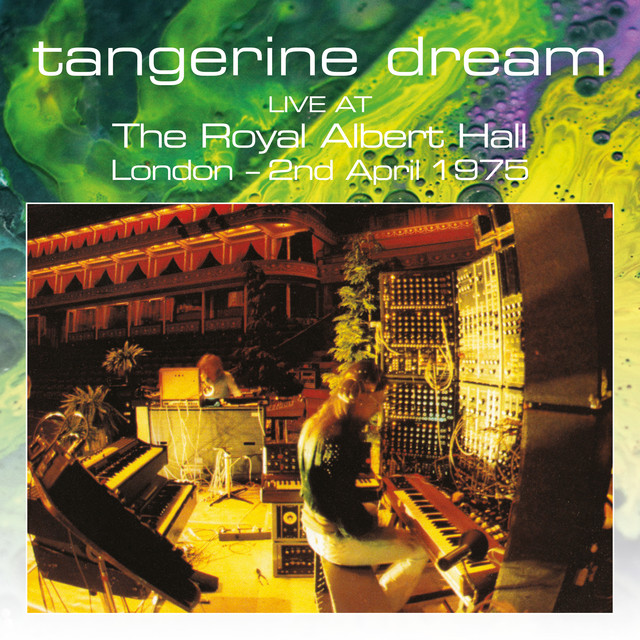
Seeking and finding Hades: Impressions on a new Tangerine Dream box set


A poet from 6th century BC, Theognis of Megara wrote that "no man takes with him to Hades all his exceeding wealth"...

However, he had no chance of coming across the newly released Tangerine Dream box set... Both Theognis and (undoubtedly) Hades would approve of this wealth in one's possession - if only they had the chance to listen to the 16 CDs and 2 BR discs of the Virgin recordings from 1973 to 1979...

In Search of Hades not only contains splendid remasters of Tangerine Dream classic albums from the 1973-1979 period, but also numerous previously unreleased tracks that are genuinely spellbinding. The Steven Wilson mixes and Ben Wiseman-remastered versions can be heralded as examples of how informed and sensitive remastering should be done, when we are flooded with countless remastered editions of classical albums that not only over-compress the original material, but may also genuinely massacre those... The Ricochet and Phaedra remastered versions notably also restored their original structure, with material that was either cut or misplaced in some previous releases.

In addition, for the first time one can hear quality recording of certain era-defining live appearances that TD fans so far only could hear in bootleg recordings and mono radio material of highly varying "quality".

First fact to stress is that the previously unreleased material is not a mere pile of studio leftovers and obscure curiosities that stayed in dusty basements for good reason. Instead, they are astonishing electronic soundscapes that are not only musically, but also historically, significant.

The Phaedra Outtakes are of simply aching beauty, with gentle piano, flutes, strings, electronic swirls and indescribable sound effects all combining into subtle, sensitive sonic paintings that are at the same time cosmic and terrestrial, alien and human.

These recordings show again something that unashamedly biased (with good reason) TD fans have known for a long time: the way that Mellotrons are used by Tangerine Dream truly stands out, when compared to the 'raw' and typical Mellotron sounds found in countless electronic and progressive rock albums.

Among the included concert recordings, the Victoria Palace live appearance is particularly notable, as some remarked: it is an evolutionary 'missing link' between the sound world of Atem and that of Phaedra.

Not only we have here a group of fiercely innovative musicians improvising live, something that in electronic music cannot be understated, but the sonic gems of this concert have the ambient soundscapes, fluid and utterly sensitive meditations of what we could hear on the classics Zeit and Atem. These are seamlessly blending with the more melodic Mellotron strings and flutes, underpinned by tight pulsating sequencers, a novel and characteristic sound that on Phaedra became a global phenomenon.

Nothing ever stays static, nothing ever has straight lines or perpendicular sharp corners. Everything here is fluid, constantly changing and evolving...

This Victoria Palace concert is also perhaps the most audible example of the heroics that some may take for granted nowadays: one can hear how the sequencers are drifting out of tune, how the jamming musicians make this process an organic part of their improvisations and we also hear how the naughty analogue equipment is being tamed again, with on-the-fly re-tuning.

The other two London concerts, at The Rainbow Room and of course the Royal Albert Hall appearance, are connecting us more with the sound world we know from Phaedra and Rubycon perhaps, but here, too we have ample improvised compositions firmly rooted in a unique variant of space / ambient music that Tangerine Dream have unleashed on audiences well before ambient was called ambient...

In the fiery sequencer patterns we already hear elements of what Ricochet was to be, as a supreme example of Berlin School wizardry that stood the test of time. One can defy modular enthusiasts and sequencer magicians of 2019 to even replicate or emulate the astonishing sequencing present on these recordings from more than four decades ago.

The concert recordings show musicians achieving something in the 1970s that is rare even today, despite the mainstream position that some genres of electronic music occupy nowadays in major live performances and festivals. These live recordings are simply humbling: one has to clash with, and firmly realise, one's own limited human abilities, when trying to even follow the intricate multi-layered details swirlingly unleashed on us by these musicians.

Here we have largely improvised jams spanning, and seamlessly combining, distant corners of many different galaxies of electronic music. Actually playing multiple layers of intricate patterns emerging from fiendishly unstable analogue sequencers, instead of static repetitive patterns that many even now think sequencers are for? Of course, why not. Seamlessly blending spacey electronic atmospheres with gentle, almost fragile flutes and strings, piano textures and human voice? Of course, why not? Do taped strings pushed through phasers and modulated effects sit at home with pulsating Berlin School patterns of a very ordered and structured Universe? Sure.

Clearly, above is a far from exhaustive overview of the box set, but even if one omits mentions and reactions to the vast amount of musical material of this treasure chest, the Oedipus Tyrannus simply must be mentioned.

This is perhaps one of the, if not the, most mythical Tangerine Dream albums. It only existed in various unofficial forms, in highly variable (but consistently low) quality versions and it gained a mythical status not only due to these factors, but also because it contains a monumental electronic suite.

The epic material takes us from the avantgarde atmospherics of the Overture to the mind-blowing sequencers of the Battle to the playful melodic inventions of Baroque (latter actually being more of a Renaissance-era slow dance if one wishes to do nitpicking, when listening to the characteristic melodic lines). It further shows, as if there was any need, that Tangerine Dream has been and remains quintessential to the history of not just one genre or sub-genre of electronic music, but to the history of electronic music, full stop.

The range of music on just this box set shows how they have remained influential for vast arrays of electronic music ranging from most avantgarde and experimental ambient to the most mainstream sub-genres.

So what would be the single central characteristic of this vast collection of music released in this box set? Can one condense into a single word all the breathtaking and fiery improvisations, delicate and fragile melodic inventions, vibrations of star systems from distant outer space, waves and fluid motions of unidentifiable liquids, swirls and storms of strange aethers?

Most definitely, yes - and Tangerine Dream fans can put it down as nothing surprising, long-known by them and merely re-enforced by the proofs in this box set:

Imagination.


Saturday, 18 May 2019

A master of the keyboards - Rick Wakeman at 70


Rick Wakeman, one of the most prominent rock legends and keyboard virtuosi, has turned 70 on 18 May.

At a young age having become known as a formally trained keyboard wizard in the progressive rock band Yes, he moved on to a hugely productive solo career, too.

Something that is absolutely essential to stress in Wakeman's case, when comparing him to other keyboard giants of the era, is that his phenomenal command of music theory and technical abilities were never self-serving and purely for show.

It is rare to have a keyboardist with vast imagination rendering vast orchestral and choral arrangements seemingly effortlessly, coupled with stunning technical ability - and still, not to have the musician venture into empty bravado just to show off his skills.

Apart from his classics like The Six Wives Of Henry VIII and the epic Journey To The Centre Of The Earth, some of his maybe lesser known concept albums like Criminal Record can demonstrate his ability to imagine huge instrumental pieces, with towering complexity but also with great expressivity - and making them seem effortless. One such track is Judas Iscariot from aforementioned album...

Whilst in the UK, especially with the arrival of punk, a lot of the excesses and visuals of the prog rock bands have gone through much ridicule, some of us had the fortune of accessing such music, very much including Rick Wakeman's monumental compositions via just the music alone.

Often the original album was not even available in certain Easter Bloc regimes that suppressed such music. Concert footage with capes and wizard outfits and knights ice skating on vast stage sets were absolutely impossible to get hold of.

Thus, one can never forget how 'accessing' such music through just the music, often via some third-hand cassette copy in the 1970s and 1980s of Communist dictatorships, was a life-changing experience.

The huge mistake in pigeonholing such music as 'prog rock excess' is that, obscured by the visual excesses of the era, the actual music is not analysed for what it actually is.

The musicianship of those bands, and that of Rick Wakeman, is still a lesson to myriad aspiring and competent, even successful, musicians today.

Sure, as he wrote in his inimitable style in his autobiographical Say Yes, there have been many hilarious stories and escapades both on and behind the stage...

Whilst he is renowned for the epic scale compositions, and the superhuman keyboard performances delivered with breathtaking technique, Rick Wakeman has often changed direction and could surprise fans with music that would never have been thought as something that emanated from his studio.

Such example is the absolute tranquility and subtlety of something like his Sun Trilogy, with the opening track of the first album below.


He often turned to solo piano, too, and leaving aside the many stacks of many synthesizers, could compose and perform exquisite gems of piano pieces, like the following from his album Night Airs.


His creative appetite and even his touring efforts have not stopped, still very active in both the studio and on stage.

Many happy birthdays, and continued inspiration for the future!

Thursday, 9 May 2019

Korg Nu:Tekt NTS-1 - The birth of a whole developer ecosystem?


At Superbooth 2019, KORG have introduced the Nu:Tekt  NTS-1 digital DIY synth.

The idea itself is splendid, but a significant aspect in these first few hours and days seems to be overlooked by most if not all initial reports.

The digital engine in the little module is basically the one inside the flagship Prologue and the Minilogue XD. The huge significance of users being able to write their own algorithms for any digital oscillator or effect they can think of was revolutionary, and covered on this blog, too when Prologue came out.

However, even beyond this, let's imagine for a moment that this little box of fun can be basically a relatively low cost developer platform for anybody who does not yet own, did not think about diving into, or was not able to dive into the world of actual synthesizer keyboards yet.

Anybody from tech savvy kids in schools to erudite tech enthusiasts approaching the world of sound synthesis & processing can use this little synth - and develop oscillators and effects usable in even flagship synths. The potentials for idea exchange and development are endless.

Once one got something working, it can be directly ported to the flagship Prologue synth's multi-engine, or to the Minilogue XD that shares same multi-engine basically. 

This could well be the device that possibly triggers the birth of an entire ecosystem and whole developer communities.

One may not have a Korg synth (yet), but can develop synthesis or processing modules that can be actually used on the "big" Korg multi-engine synths mentioned above.

Also, think of the "pull" from higher-end products... if one develops something on this, will want to hear it and try it out on a Minilogue XD or even Prologue...

In addition, if we think how this can get VST developers to get creative on this platform, at a low cost, it can really "explode" the possibilities and the range of custom algorithms.

Therefore, it is a very astute move by KORG, and it is highly significant how they open the product up rather than lock it into manufacturer preconceptions on how we should or could use it.

The video below is a Superbooth interview by Synth Anatomy:


Sunday, 21 April 2019

Brian Eno's "dangers" of digital...


A not too old, not too recent Brian Eno interview posted in one of the synth forums is a superb concentration of many ideas and aspects that exemplify how countless (and sometimes endless) threads on topics like DAW vs. DAWless recording, digital vs. analogue etc. have often contrived premises.

To confuse or deliberately conflate medium and content, tool and its user, technology and its use cases is a fundamental reasoning error, irrespective of the subject matter and regardless of who of what stature may commit it.

So how does a short article with a short interview manage to condense such a respectable list of faux pas? Well, where the journalist goes wrong is the classic problem of considering who says something instead of looking at what is being said, without suspending one's analytical and reasoning abilities. Also, he makes huge leaps based on what Eno is saying, some sweeping statements are not just simply wrong, but also disregard vast segments of the creative community in order to make some highly tendentious points.

The article suggests that digital, allowing myriad editing and correcting, is somehow more "dangerous" as we may "lose" something that we may have had if we had laboured on that recording via unforgiving and immutable means.

"Do I resist the temptation to perfect this thing? What do I lose by perfecting it? It’s difficult. Because now it is possible to mend anything, correct anything. "


Well, as complicated and philosophical one might make it, it is remarkably simple: everything is a mere matter of choice.

As the great photographer Henri Cartier-Bresson once said, when he was told some of his street photography shots were "lucky" shots: there is no such thing as luck. Everything is a choice, N people with cameras may have been there at that moment, but maybe only one chose to take a shot and chose how to take that shot. 

He may have had the desire later to "perfect" it, i.e. eliminate some unfortunate framing or detail that happened in the spur of the moment. He may not have had that possibility back then. 

If he had the ability to crop or tweak the shot, then it would have been purely his artistic decision to make use of it and in certain ways - technology would not have 'made' him tweak the shot.

Eno mentions Bob Dylan going back to bare bone recording methods for his album Shadows in the Night.

Dylan said that “I could only record these songs one way, and that was live on the floor with a very small number of mics. No headphones, no overdubs, no vocal booth, no separate tracking…The engineer had his own equipment, left over from bygone days, and he brought all that in… There was no mixing. That’s just the way it sounded… We used as little technology as possible.”

Yes, the finality of recording without any editing possibility commands or at least demands respect. We appreciate the acrobats without safety nets more - but this is not only about the existence or absence of a safety net for the recording artist.

Here Eno is again blurring some boundaries... as he is mixing tool with the use of the tool, without even distinguishing between purely mechanical (or procedural) efforts and the actual creative efforts.

In the early days of wax cylinder recordings and later direct recordings onto gramophone master disc, the recording process offered absolutely zero editing or correcting possibilities. One threw away the take or not, that was pretty much the only choice one had. 

The fact, that technology allows endless corrections and tweaking does not mean it is technology's fault that some may over-use these. 


Ansel Adams has laboured for days in his dark room to achieve his superb prints, but he was using eminently analogue gear - and the shot on the negative was "it", often impossible to reproduce again. Same goes for his end results, some of his prints are unique, full stop. 

This, though, while it should not be fetishised for obvious reasons, is not an example of how "bad" endless tweaking offered by modern technology is in itself. 

“So the question that everybody’s asking is, is it getting any better as a result of all this?"

As obvious as it may sound, "better" depends on the end objective and the artistic intent. A monstrous bum note will not be left in, when it is a recording for a film soundtrack - just to consider one trivial example. However, if this is a recording of a jam in studio or at an event, with a number of great performers, then clearly a good choice would be to leave it as it is, for authenticity. 

How can this be even asked and have a subtext of questioning the actual technological possibilities, without even having a balanced set of use case examples? 

"But it’s such a hard temptation to resist. You’re recording a song and find a note that is really quite out of tune. In the past, you’d have said, it’s a great performance, so we’ll just live with it. What you do now is retune that note. So you’re always asking yourself, have we lost something of the tension of the performance, of the feeling of humanity and vulnerability and organic truth or whatever, by making these corrections? It does make you question the role of new technology in the studio. "

Again, as absolutely basic and simple it sounds (and it really is...), it is an artistic and technical choice: do we leave the performance untouched or - because now we can - we correct it?

The temptation being hard to resist, well, this point really puts the matter squarely in the lap of the artist (assuming he/she has a say).  If the artist is not making that decision, that is a problem with the management chain and not the technology.

Is "it" getting any better if we do tweak it for days or months? Well, it simply depends on the central aesthetics and the end goal set by the musician(s) and engineer(s). 

To do something just because we can is certainly a technological and artistic path that can backfire or make things totally sterile and overworked. 

But to say that this is somehow the technology's fault, it is absolutely remarkable - especially coming from someone of this stature. 

As he reminisces over the heroic years with very limited technology and editing possibilities, Eno does make the valid point that many who buy endless heaps of synthesizers and studio equipment can take heed of. 

“It’s partly to do with engineers working with very limited resources and really understanding them well. If you’ve only got two mics, one compressor and a couple of pre-amps, you really know what they do, because you’re using them every single day. It’s like an artist who is extremely good with water colours. Water colour is a very limited medium but you can become incredibly good with it if that is all you have. "

Indeed, in electronic music, as in any recorded music and in photography, too, the advent of 'modern' technology makes us quite pampered by having virtually infinite choices of instruments and recording equipment. 

One does admire the sheer effort that went into an artwork or music recording, but going back to the Ansel Adams example: the reduction of effort spent on the non-creative mechanics of a creative workflow is, in itself, not a negative - but a net a positive. 

If one can achieve in the studio in minutes or hours what used to take days in the 'heroic' era, then one is gaining more immediacy, more and not less creative possibilities by not spending so much time and effort on the... mechanics. 

If Ansel Adams could use a burning and dodging brush in Photoshop, instead of paper cutouts and numerous segments to balance selectively the exposure on regions of his prints, would his prints worth less?

Some might say yes, but they are factoring in some assumptions about the process, and attributing certain subjective value to certain stages of that process - instead of considering the end result and the creative intent.

This interview article is a super condensed example of where these philosophical-sounding discussions go wrong.

Fetishising, or worse, fearing, certain workflow and certain tools, because they could be mis-used or exaggeratedly used, is not only often puerile, but fundamentally places tools above their users in elaborate attempts to make, by definition, flawed generalisations. 

There have been, and there are, numerous staggeringly innovative and deservedly illustrious artists who concentrate on their creative process, optimise their workflow and embrace all technology.

They do this because they, consciously or not, refuse to waste their time and efforts on logically void musings on how more numerous and more complex tools could be misused by somebody... to then label the tools themselves as "dangerously" making us "lose" some je-ne-sais-quois in the artistic end result.


Friday, 12 April 2019

Early Muse - a free set of Korg Kronos patches of Medieval instruments


Time travel occasionally takes less of a challenge than those described in ample volumes of sci-fi literature and theoretical physics...

Based on a number of samples of Medieval instruments encountered over the years, 24 free programs for Korg Kronos workstation have been created, in a program bank called Early Muse.

The sounds are those of wind, string and percussion instruments used in the Middle Ages and the Renaissance period - and whilst some are rare, others are still in use today.

The embedded video runs through the 24 programs, which mostly use just room reverb for a natural sound - except some that show what happens when the Kronos effects engine is thrown at the ancient instrument sounds and projects them into the future...

The information on YouTube also contains the Dropbox link to download the sample and program files that are understood by Korg Kronos. It should work on all Kronos versions, and the list of programs is below.

Programs with SW1 control will shorten the release, like a damping effect - if damper pedal available, can map the control accordingly.


  • Hackbrett SW1        
  • Lion Harp SW1        
  • Cimbalon             
  • Psalter SW1          
  • Psalter2 SW1         
  • Kanun SW1            
  • Kanun2 SW1  - the double instrument         
  • Nyckelharpa          
  • Nyckelharpa Symp     (just the sympathetic strings)
  • Lute                 
  • Strings Trio SW1     
  • Dudy                 
  • Gralla               
  • Kortholt             
  • Garklein             
  • Wind Trio            
  • Riq C4-B4   - this and below tuned in D, note ranges listed for the different hits
  • Bendir E4-B4         
  • Tar E4-B4            
  • Syrien E4-B4         
  • Nyckelharpa Layers  - strings and sympathetic strings together with long release
  • Nyckelharpa Space    - using a vast O-Verb effect
  • Garklein Mystery JSY+  - delay and chorus for an outer space feel, JSY+ changes chorus amount
  • Gralla Mystery JSY+  

The demo has a few accidental notes, as one loses the will to live making the video going through all of the programs :)...

Enjoy the time travel, what better tool for it than Kronos, the God of Time ... 


A very useful tutorial on loading, if needed, individual programs can be seen here:


Tuesday, 2 April 2019

From ancient Persia to cosmic Tangerine Dream: Schiller's Morgenstund


With all its expanse and range of moods, it is impossible to start an overview of this new multi-disc release from Schiller without emphasising some highly notable collaborations on the album.

Schiller fans are by now quite accustomed to stellar names appearing on liner notes, from world music to classical music, opera to electronica. Speaking of the latter, just over a decade ago one was treated to a Schiller - Klaus Schulze collaborative effort on the Sehnsucht (i.e. Desire) album, on a lengthy and animated track called Zenit.

Spring 2019 arrived with another very special collaboration between Christopher Von Deylen a.k.a. Schiller and another legend of electronic music: Tangerine Dream.

On the new album's first and second disc we have tracks that can take the listener from contemplative moods to head-bobbing and/or energetic dance movements, and some incursions into world music are particularly notable.

Pouya Saraei
Ethnic elements are combined with quintessentially Schiller electronica, good examples of animating rhythms, catchy, often soaring melodic phrases and world music infusions are Das goldene Tor or Aphrodite.

However, the perhaps superlative moment for such world music and electronica blends is the track entitled Berlin to Tehran. 

Here Santur, the ancient Persian hammered dulcimer of stunning sonic personality in Pouya Saraei's hands, is having a splendid conversation with Schiller's electronics. Ancient and modern indeed can have a dialogue, and they manage to augment each other to make a very stand-out track on this first part of the Morgenstund album.

Now Tangerine Dream fans have been rather spoiled recently by stellar live performances and album releases, always treating audiences to the by now firmly established tradition: a "session", i.e. a lengthy live composition at the end of the concerts. This collaboration, on Schiller's Morgenstund album, presents fans with an entire suite composed and performed by Schiller and Thorsten Quaeschning.

The Morgenstern composition, split into nine parts, has a perfect "session" feel.

The electronic trip starts off with spacey and lush chords, establishing a serene mood - but as soon as the characteristic Mellotron-esque flute presents its delicate melodic ornaments on the spacey electronic layers of sound, Tangerine Dream fans undoubtedly have an 'Aha!' moment...

As one may gather from Schiller's spacey Einlassmusik series of compositions, and absolutely from entire Tangerine Dream discography, this electronic dialogue is guaranteed to have a smooth and structured build-up.

Indeed, the characteristic TD feel develops further from Morgenstern Part II onwards. Whilst there are catchy and gentle melodies one recognises from Schiller compositions, too, the sequencers building up by Part III into a firmly established and highly characteristic Tangerine Dream sound land the listener in a superbly captivating electronic voyage.

By the time one gets to Part V, the music is unmistakeable TD, with rich pads and recurring melodic ornaments waving in and out of the conversation between the two electronic artists.

Thorsten Quaeschning (photo: Wiki)
Whilst sequencers virtually take control here, with firm and percussive patterns, too, there is always something changing - so the listeners' attention is guaranteed to be grabbed.

Part VI pulls back  the forces unleashed in the previous section, with a calm interlude - and then sequencers return for another captivating conversation. Their intricate patterns become a structure that underpins the melodic lead lines and lush pads that hover in the room where Morgenstern plays...

The organic feel of the composition is augmented further by the fact that Part VII and VIII's lead melodies feel like a calm improvisation, floating above the spacey atmospherics and pulsating sequencers, thus everything stays fluid. There really is nothing mechanical about this electronic collaboration.

The final segment of the composition lets all electronic and human motion settle, gradually reducing the mighty structures to just a few pulsing notes in the end.

The collaboration can be quite easily labelled as a very successful one, whereby individual characteristics can be identified by both Schiller and TD fans - and the resulting blend is able to produce something new, well-structured, executed with patient and good dosage of energy.

Therefore the whole composition feels fluid, ever-changing, with a serene start and finish that makes the journey a very well-rounded one.

The next disc on Morgenstund is the ten-part Wanderlust composition that, in longer listening sessions, can continue the journey with a more ambiental, atmospheric adventure in vast electronic spaces.

Quite a demonstration of versatility, if one considers the range of tracks on the album - attention to detail is omnipresent, and as one could hear often in the Schiller discography, Morgenstund, too provides many chances for incursions into Eastern music elements.

If one wants a highly melodic and rhythmic entertaining time, the parts leading up to Morgenstern are a good vehicle... but for a thoroughly introspective and captivating journey, tune in to the Tangerine Dream collaboration's exquisite nine segments, then finish off with the Wanderlust suite...

Schiller (photo: Financial Tribune)