Showing posts with label Edgar Froese. Show all posts

Sunday, 21 February 2021

Digital genius: Happy Birthday Wolfgang Palm!


On Wolfgang Palm's birthday, it is difficult to enlist just how revolutionary his synthesis method, and the resulting synthesizer, was in the late 1970s.

What the public later became acquainted with under the name PPG Wave was the result of sublime inventiveness and practical genius. 

Palm invented the synthesis method based on rapid cycling through tables of waveforms, the resulting spectral richness and truly unique character of the sounds making it instantly recognisable. 

The key distinction between what some call wavetable synths (which play back complex waveforms, even entire sounds from digital samples) and Palm's method was the use of single-cycle waveforms in tables that the digital circuitry was sweeping / cycling through. Controlling the tables of waveforms, the way in which the sweeps were done etc. one could create astonishing sounds.

Palm's practical engineering genius was not just in the construction of the early prototypes that were fully usable as musical instruments, but also in the creation of the wavetables. Most of the PPG Wave and Waveterm "factory" wavetables are to this day absolute classics, and many digital synths and samplers have imitations or recreations of these classic and unique sounds. 

Nobody sounded like Edgar Froese and Tangerine Dream in the very late 1970s and in 1980, as they were the supremely "lucky" electronic musicians to get their hands on early incarnations of Palm's invention.

If we listen today to Froese's Stuntman solo album and Tangerine Dream albums like Tangram and Exit, we are still struck by the beauty and the timeless nature of the sounds emanating from the PPG Wave synths.

Later it permeated electronic music genres ranging from space ambient to synth-pop, the number and kind of artists using the PPG synths is staggering. One finds the characteristic sounds on everything from A-ha to Ultravox records.

A testament to the enduring value of the synthesis method is that Waldorf synths have brought us many immensely beefed-up variants (including plugins that recreate the classic PPG Wave versions' sounds). 

Waldorf Wave, a hugely expensive monster, was one example - but much more affordable and powerful later incarnations of the technology are with us today. 

Waldorf microWave and Blofeld are just two examples, and Behringer have also announced that they would create a PPG Wave clone. At which point one has to mention that the latter had analogue filters, which gave it extra character - and Blofeld for example models these filters digitally.

Happy Birthday Wolfgang Palm and huge gratitude for revolutionising the electronic sound landscape!


Tuesday, 30 June 2020

Fifty Years Of Unique Audentity: Klaus Schulze


Borrowing the pun of one of his landmark double albums, it seems fitting on the last day of June to look at the vast body of work of one of the most individual electronic music visionaries of our times, someone with a very unique and instantly audible identity... pardon, audentity...

In June 1970, the first album appearance of Klaus Schulze occurred. At that point he was a member of what has become a veritable institution in the electronic music sphere: the band Tangerine Dream, founded by the late Edgar Froese.

Electronic Meditation was the first and last Tangerine Dream album that featured Schulze - as he promptly moved on to establish his, by now legendary, solo career. 

Audiences may not have suspected at that time that the drummer, who joined Tangerine Dream after a brief and unreleased musical contribution in the rock band Psy Free, would become a unique and vastly (seldom successfully) imitated electronic music luminary.

His early solo albums, Irrlicht and the double LP Cyborg, presented us a daringly and unashamedly experimental musician who could conjur up entire strange worlds in as long as possible continuous compositions. Back then, the physical medium only allowed twenty-odd minutes of continuous sonic poetry... but the later Klaus Schulze of the CD era could mesmerise us with seventy-plus minutes long monumental electronic structures...

Well before "trance" entered the terminology of music, and well before it has become a label for a particular sub-genre of electronic music, Klaus Schulze was creating an unmistakeably personal and truly unique kind of electronic trance.

One could pick from his vast discography the hypnotic Timewind and Mirage from the heroic and analogue 1970s, the astounding Audentity or En=Trance from the confident and digital 1980s, the spellbinding Das Wagner Desaster or In Blue of the mature and limitless 1990s... or the epic, but intimate, Rheingold or Silhouettes of the recent years...

The one central trait of all Schulze albums has been a rare, much sought-after, and countless times attempted to be imitated feeling that this music simply comes into being, without someone playing electronic or other instruments... and it exists, flows, occupies all available space without any human intervention.

It is impossible to listen to Klaus Schulze as background electronic music. Whilst he was and is recognised as a giant of the sequencer-oriented Berlin School of electronica, Schulze's music demands close attention.

Even if, on the surface, repetitive structures or sequenced elements are present, they are full of continuously changing, morphing, flowing myriad details. The intricacies of his live or studio performances are dazzling, if one closely listens to the ever-changing sonic Universe he achieves to create in our room. 

Over the fifty years, Schulze has never stopped innovating and changing. Sure, some artistic decisions could be seen as questionable or one could point out major U-turns in his ars poetica.

The key aspect one must not forget is that artists like Schulze have experimented with sometimes wild departures in highly unexpected directions, instead of standing still. We may wish that we had been treated to countless repetitions of Timewind and we may go misty-eyed when thinking nostalgically of the musical world of Dune or X. 

However, as in the case of Tangerine Dream, one has to realise that instead of self-repetition, such artists were daring enough to constantly seek out new directions, experiment with even never before touched technologies, and move with the times - or, actually, define those times. 

He has treated us to superhuman-looking and -sounding live improvisations, impossible to dissect and mind-blowingly complex whirls and galaxies of sequencer patterns, vast floating sonic ambiences before ambient music became a term, trance-inducing grooves before trance music became a term, imaginative and daring use of sampling, collaborations with legendary musicians as far from electronica as one could possibly imagine... Who would have thought the legendary  Lisa Gerrard's vocal improvisations would perfectly and astonishingly blend in with Schulze's vast sequenced structures in a live setting, too?... 

It might be impossible for an avid electronic music, or even Klaus Schulze, fan to like all his live and studio albums... However, the one constant we can easily hear on his albums, irrespective of the fundamentally different sound worlds he has experimented with over half of a century, is that Schulze sound...

What is it exactly? The long flowing compositions? The mind-bendingly complex and constantly shifting sequencer work? The superhuman improvisations running through the fluid soundscapes? The seamless combination of ancient sonorities, even ethnic vocals, ocean-deep sonic textures, and fiery improvised leads?


Even after fifty years of album releases, one cannot be sure... but as soon as previously unknown to me Schulze album or composition popped up on radio or elsewhere, I used to jump: that had to be Schulze!.. and it was.

If there was one person who would, not too strong of a word, hate pigeonholing his vastly varied musical output, it would be Schulze himself. 

As the grand master put it in a recent interview, "Remember ‘fusion’ once? Or ‘jazz rock’? And in 1990 it was for some parts of electronic music ‘acid’, ‘acid jazz’, ‘house’, ‘deep house’, ‘Detroit techno’, ‘rare groove’, ‘New York garage’, ‘industrial’, ‘Latin hip hop’ et cetera. All these fashionable coming-ups of words are not the terms and definitions I think or care much about. I am neither a swish sociologist nor a smart journalist but just a dull little musician who’s doing and enjoying his very own doings, and I call it ‘music’.”

Thus... thank you for fifty years of live and studio albums of music, Maestro... and may we be spoiled by further sonic creations in the future...


Monday, 22 January 2018

Three years on... the Dream continues


Edgar Froese (Photo: commons / wikimedia)

Edgar Froese, the founder of the electronic legend, well, almost institution that was and is Tangerine Dream, passed away three years ago, on 20 Jan 2015.

As a prominent and eminent figure of what became known as the Berlin School, he has navigated through almost five decades of tumultuous musical, technological and social changes with his band.

As a figure of speech, we can probably say countless studio and live albums, a long list of illustrious soundtracks have been created, plus of course numerous solo albums.

A quintessential characteristic of his philosophy and that of the music of Tangerine Dream has been the fact that technology never took over and never became the ultimate goal. It always served a purpose as a mere creative tool, as revolutionary as it was in Edgar's and his band mates' hands.

Edgar would be very happy to see the band today and his legacy - and he may well be extremely happy at, as he put it, another cosmic address he moved on to in January 2015.

The 50th anniversary album, Quantum Gate, which was also reviewed here has been a great success.

The number of not just electronic but rock and other music magazines that have almost re-discovered Tangerine Dream was a joy to see.

The return to improvised live performances and the release of these lengthy pieces are a superb renaissance for the fans, who last heard such concert pieces several decades ago.

The current members of TD, Thorsten Quaeschning, Ulrich Schnauss and Hoshiko Yamane, have taken Edgar's overall musical and creative philosophy successfully into Edgar's posthumous period.

There is something remarkable happening, and Edgar would be, we can be sure, all too happy to witness this: unlike bands like Yes, who without a defining figure joining them live have really lost their way and leading to rather mechanical live album releases, Tangerine Dream is continuing with vast bursts of new creativity.

While the sound stayed instantly recognisable, it is a TD of the 21st century and with state-of-the-art, but musically functional as ever, technology.

On a personal note, I first came into contact with Edgar and TD's music as a teenager, beyond the Iron Curtain. I like to always point out for people who could access any music at any moment in any circumstances, that getting my hands on such music was a lengthy but rewarding adventure... and what escapism it was!

However, I would never have thought that more than three decades later I shall be treated to fresh and invigoratingly scintillating Tangerine Dream albums that have the unmistakable presence of Edgar's musical spirit still.

While remembering with sadness Edgar, there is joy in witnessing a quite unique phenomenon in the contemporary music scene.

Rest in peace, tremendous wizard of sounds, of time and space - and very glad to still have You with us in the continuing story of the phenomenon called Tangerine Dream!


Saturday, 28 October 2017

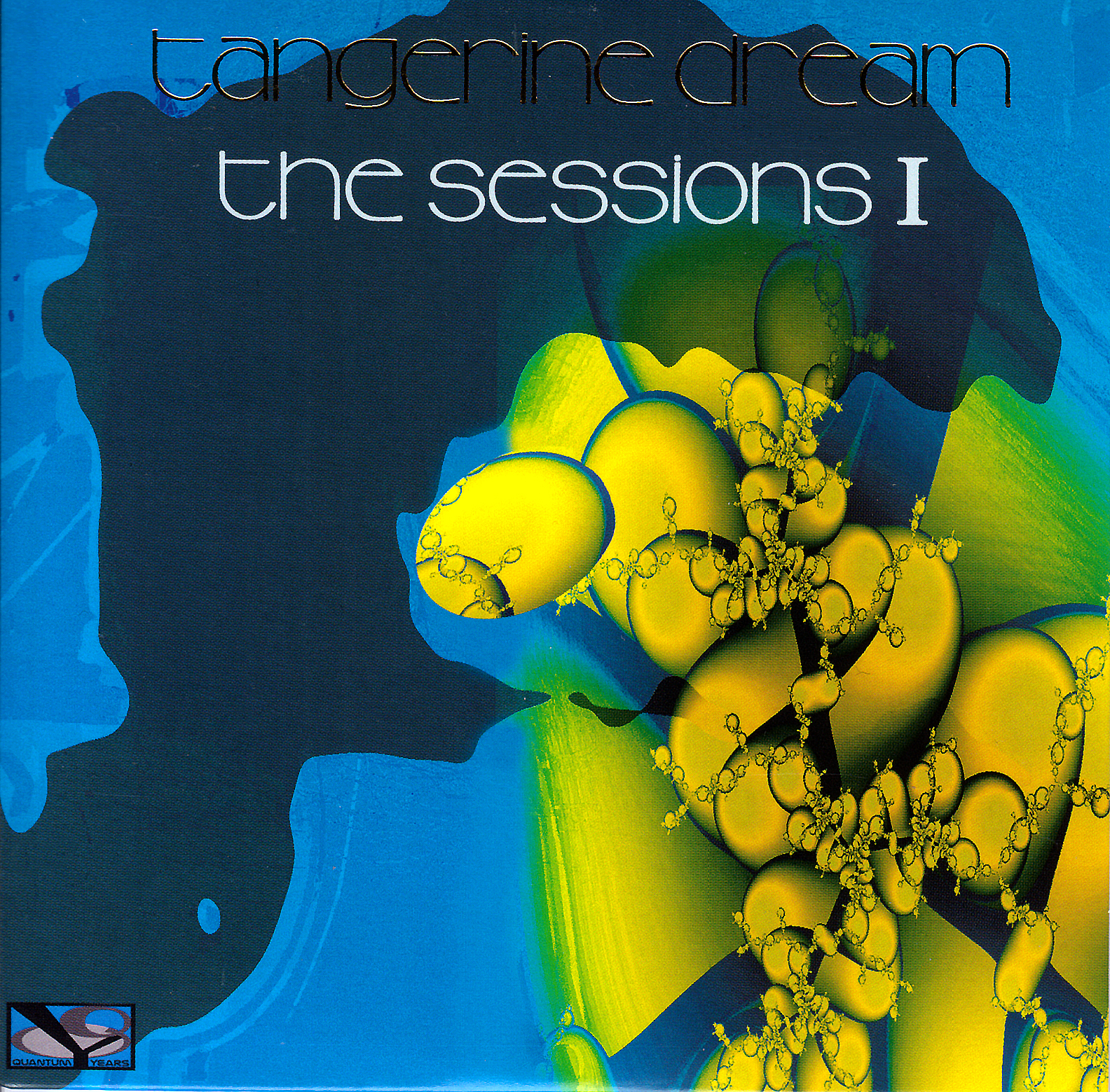
Tangerine Dream - The Sessions I.


It may seem like an overstatement after fifty years of existence and a vast discography, but Tangerine Dream's new release, The Sessions I., represents a truly key moment.

The electronic legends released their first live album, Ricochet, in 1975.

Around the time when other legendary pioneers were using sequencers for intentionally static patterns (Kraftwerk), for abstract fluid textures (Klaus Schulze) or pulsating melodic motifs to punctuate floating soundscapes (Jean-Michel Jarre), Tangerine Dream were creating something eminently different.

Ricochet and subsequent live albums by the band have shown a unique approach to electronic live music.

TD were producing high-octane sequencer-based improvised materials, with sequencers having been actually played on stage - such that the mind-bending multiple patterns were jamming hand in hand with electric guitar solos and keyboard improvisations.

The reason why The Sessions I. album is a notable moment is that the band, after a few decades of live renditions of studio album tracks, have returned to that dazzling art of extra-long improvised live compositions. After a session recorded and released on the album Particles, this is an hour-long journey.

The two, around half an hour long and largely improvised, tracks by Thorsten Quaeschning, Ulrich Schnauss and Hoshiko Yamane were recorded during the Edgar Froese memorial concert held in 2017 in Budapest and during a later live performance in Hong Kong.

If one makes here some references to albums of the past, it must be emphasized: this is not because the new album is a self-imitating nostalgia trip trying to just resurrect some old sounds for the long-standing fans... The references are being made merely because they may, to some extent, be suggestive of the tone and mood of the soundscapes on this album.

The opening track Blue Arctic Danube is something we have not heard for some decades, and again Ricochet or Encore spring to mind. This, in itself, is quite something, but even more remarkable is the fact that the material sounds fresh and brings a unique sound even in the electronic music scene of 2017.

Fans can immediately and instantly conclude, this is absolutely characteristic Tangerine Dream - from the first ambient textures to the trademark intertwined sequencer patterns to the arrival of achingly beautiful and softly played mellotron sounds (or of its digital resurrection rather, the Memotron).

The 30-minute musical journey is phenomenal, and without any previous knowledge of TD discography, one can be taken on a dazzling trip across many inner states - from mellow meditation to highly energetic pulsating sonic roller coaster rides to cinematic vistas constructed from sounds.

It is light-years above the way in which even now many use electronics and sequencers on stage - and with the live improvisation bringing in the various building blocks in a, one can safely say, typical Tangerine Dream manner, the listener cannot avoid being drawn into the musical dialogue that happens between the band's current three members.

Gladiatorial Dragon is of a different tonal register and it, too, is of a highly satisfying duration of just under 30 minutes - and fans of the Poland live album may perk up immediately, when they hear what is unleashed in this track.

While it starts with deceptively soft choir-like harmonies, a typical sneaky appearance of metallic sequencer patterns tells us something big is about to happen.

Well, indeed, TD never lets fans down when they decide to tease with such build-up. We know something is coming, and, by god of electronica, it does arrive.

The ultra-high-energy improvisation unleashed by the trio lifts the roof, this is electronic rock without electric guitars - but instead of guitar pedals being put through their paces, here we have nonstop changing filters driven into whistling self-oscillations, envelopes tightening and loosening the grip on the onslaught of sequencer notes, ring modulations and who knows what else unleashed by humans on their state-of-the-art electronic gear.

Yes, while it sounds highly technical, this is again a superlative lesson in how to make eminently electronic music in eminently human and passionate manner, without sliding into merely abstract sonic explorations or safely staying in the realm of some crowd-pleasing rhythmic content.

Nothing stands still in either of the two long tracks, one can hear the humans on stage improvising with vast powers at their fingertips and playing with and against each others' musical parts, as a jazz-rock band would.

If there was a live album in  the electronic music of the 21st century that can demonstrate to skeptics how the apparent contradiction between the nature of technology and the needs of highly organic live improvisations can be eliminated, then The Sessions I. is it.


Friday, 29 September 2017

After half-century of Tangerine Dreams


Tangerine Dream, depending on who one talks to, is one of the, or is the, most defining names in electronic music and in what has become known as the Berlin school of electronica.

Today, the 29th September, we can celebrate 50 years of their existence - even if, alas, the founder and superlative pioneer Edgar Froese is no longer among us.

Tangerine Dream's discography is simply huge - and so is their musical range.

Instead of being boxed into specific sub-genres of electronica, they have produced extremely varied output in terms of era-defining studio albums, soundtracks for some true cinematic landmarks (think of Friedkin's Sorcerer or Bigelow's Near Dark), and series of live albums that often featured entirely new material (e.g. the spellbinding double LP Poland or the much later Logos).

It has always been unfair in general, and certainly unfair specifically to Tangerine Dream, to expect, with ardent but nostalgic fervor, the artists to produce the same style of material that marked their creative peaks some decades ago.

Tangerine Dream, as many high-mileage pioneers, have changed directions many times, sometimes questionably, sometimes mesmerizingly... often radically... but it has been a phenomenal journey from early psychedelia to unparalleled use of sequencers and trailblazing new technology to space ambient to electronic rock to soaring cinematic soundscapes and soundtracks.

Their most recent album, Quantum Gate, is part of that continued journey- its release being timed exactly on the 50th anniversary of the band's existence.

The band, which proved that eminently high-tech instruments can be used to expand what human imagination can work with and materialize into soundscapes without technology having taken over, even in its most recent line-up continues successfully Edgar's legacy.

Edgar Froese's mind and soul is present in each of the tracks - and it is admittedly a refreshing and perhaps to some a quite well above expectations sensation that the new album is absolutely quintessential Tangerine Dream.

While it sounds like a spellbinding quantum physics-inspired musical journey of uttermost technological prowess, it is also vintage Tangerine Dream and it is eminently human instead of what many other practitioners of electronic music ended up producing...

If we feel nostalgic about the peerless fluidity and seamless mind-bending sequencing of Love on a Real Train, then Proton Bonfire on the new album will satisfy us...

If we would like to revisit the spiraling heights of Ricochet or Rubycon, then Roll the Seven Twice or Granular Blankets will equally satisfy us.

If we want some mellotron flashbacks of Phaedra or the high-octane electronic rock of Force Majeure or Pergamon Live, then we have Tear Down the Grey Skies.

The album is unmistakably and instantly recognizably Tangerine Dream, and despite the absence of its founder and central intellectual luminary, the music is a superb continuation of its long history.

Perhaps it makes some ardent fans jump or resort to long-distance spells :) when reading this, but... one of the most remarkable aspects of this album is that it sounds more quintessentially Tangerine Dream than some of the past albums when several of the key figures of the band's history were still in the band...

Even if one picks out this one quality alone, huge respect to Thorsten Quaeschning, Hoshiko Yamane and Ulrich Schnauss for continuing Edgar's creative thinking and producing something original, but at the same time characteristic of several decades of TD output.

Whether future artistic choices will take the new line-up into very different directions, or this characteristic sound continues, well, it is certain that we shall find out - as there seems to be no mellowing of creativity in the Tangerine Dream music laboratory.